It's easy to assume songwriting requires a studio's worth of gear before you can start, but the actual toolkit for a beginner is much smaller than it looks from the outside. Most working songwriters built their early habits around a handful of simple, inexpensive tools used consistently, not an expensive setup used occasionally.
This article separates what you genuinely need from what you might eventually want. The goal is to remove "I don't have the right equipment" as an excuse, since nearly everything described here is either free or already in your pocket.
The Only Truly Essential Tool: Capture
If you take away everything else, the one non-negotiable tool in songwriting is a reliable way to capture ideas the moment they happen. Melodies and lines arrive at inconvenient times, and an idea that isn't recorded or written down within a few minutes is usually gone for good. A phone's voice memo app, used the instant an idea occurs, is often the single most valuable songwriting tool a beginner owns.
The habit matters more than the specific technology. Some songwriters prefer typing lyric fragments into a notes app; others prefer humming into a voice recorder. What matters is making capture automatic enough that you don't lose ideas to the gap between having a thought and getting it down.
Instruments for Writing, Not Just Playing
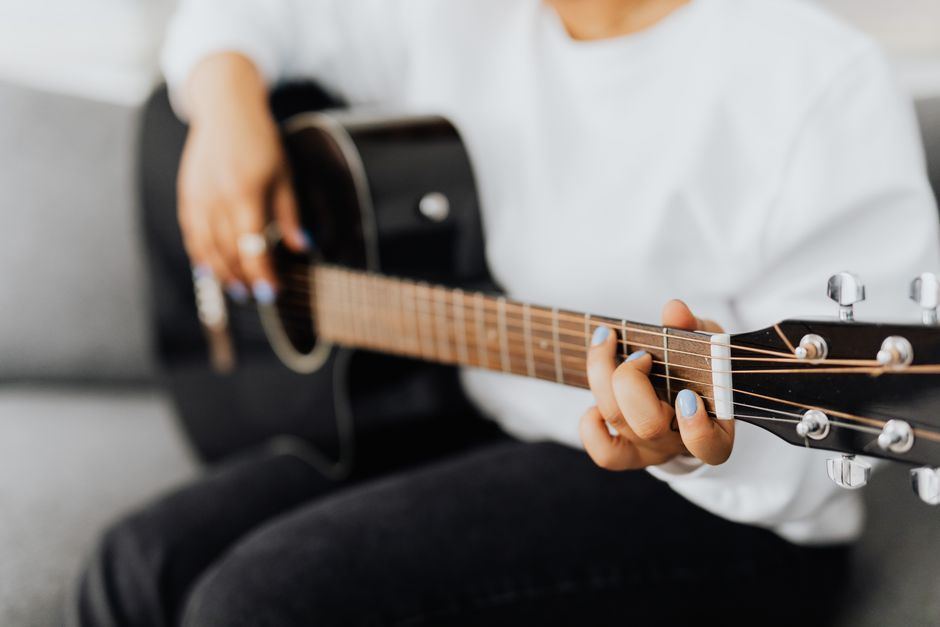
You don't need to be an advanced player to use an instrument as a writing tool. A handful of basic chords on guitar or piano, learned well enough to move between them smoothly, is usually enough to support early songwriting. The goal at the writing stage isn't performance skill, it's having enough facility to test melodic and harmonic ideas quickly.
If you don't play an instrument yet, that's not a barrier to starting. You can write melodies by singing and capturing them, then work with an instrument (your own, a friend's, or free software) later to find chords that fit. Many strong songs began as voice-only ideas before any instrument was involved.
Notebooks and Lyric Sheets
A dedicated notebook, physical or digital, gives lyric fragments, titles, and ideas a single home instead of being scattered across random scraps. Many songwriters keep a running list of title ideas and strong phrases separate from full lyric drafts, since a good line often arrives long before the song it belongs to.
When drafting a full lyric, a simple lyric sheet, just the words laid out by section (verse, chorus, and so on), keeps you focused on language and structure without the distraction of chords or recording. Some songwriters find that drafting lyrics away from an instrument, on paper or in a plain text app, produces clearer language than drafting at the keyboard with a guitar in hand.
Apps and Recording Tools
Beyond voice memos, basic apps can meaningfully support a beginner's process: a simple multitrack recording app lets you layer a rough vocal over a chord loop; a metronome or drum-loop app helps you feel tempo and rhythm while writing; a chord-reference app can remind you of shapes you haven't memorized yet. None of these needs to be sophisticated or paid software.
It's worth resisting the pull toward feature-heavy production software early on. Writing and producing are different jobs, and spending hours learning a complex recording program can quietly replace actual songwriting time. A basic, low-friction tool that gets ideas down quickly usually serves a beginner better than a powerful one with a learning curve.
What You Don't Need Yet
Beginners often feel they need a full studio setup, expensive microphones, or professional software before their songwriting "counts." None of this is necessary to learn the craft. Professional-grade recording quality matters for a finished release, not for a working demo meant to help you develop and remember a song.
Similarly, deep music theory knowledge, while useful eventually, isn't a prerequisite for writing real songs. Many effective songwriters work for years with a practical, by-ear understanding of a handful of chords and scales before studying theory formally, if they ever do. Theory can clarify what you're already doing; it rarely has to come first.
A Beginner's Toolkit at a Glance
The table below lists a minimal, practical toolkit organized by what each item is actually for.
| Tool | Purpose | Cost Level |
|---|---|---|
| Phone voice memo app | Instant capture of melodic and lyric ideas | Free (already owned) |
| Basic guitar or keyboard | Testing chords and melodic ideas | Low to moderate |
| Notebook or notes app | Collecting titles, lines, and lyric drafts | Free to low |
| Simple recording app | Building a rough demo of a full idea | Free to low |
| Metronome or loop app | Feeling tempo and rhythm while writing | Free to low |
Notice that nothing on this list requires a significant financial investment. The toolkit that actually matters for a beginner is built from consistent habits, not expensive gear.